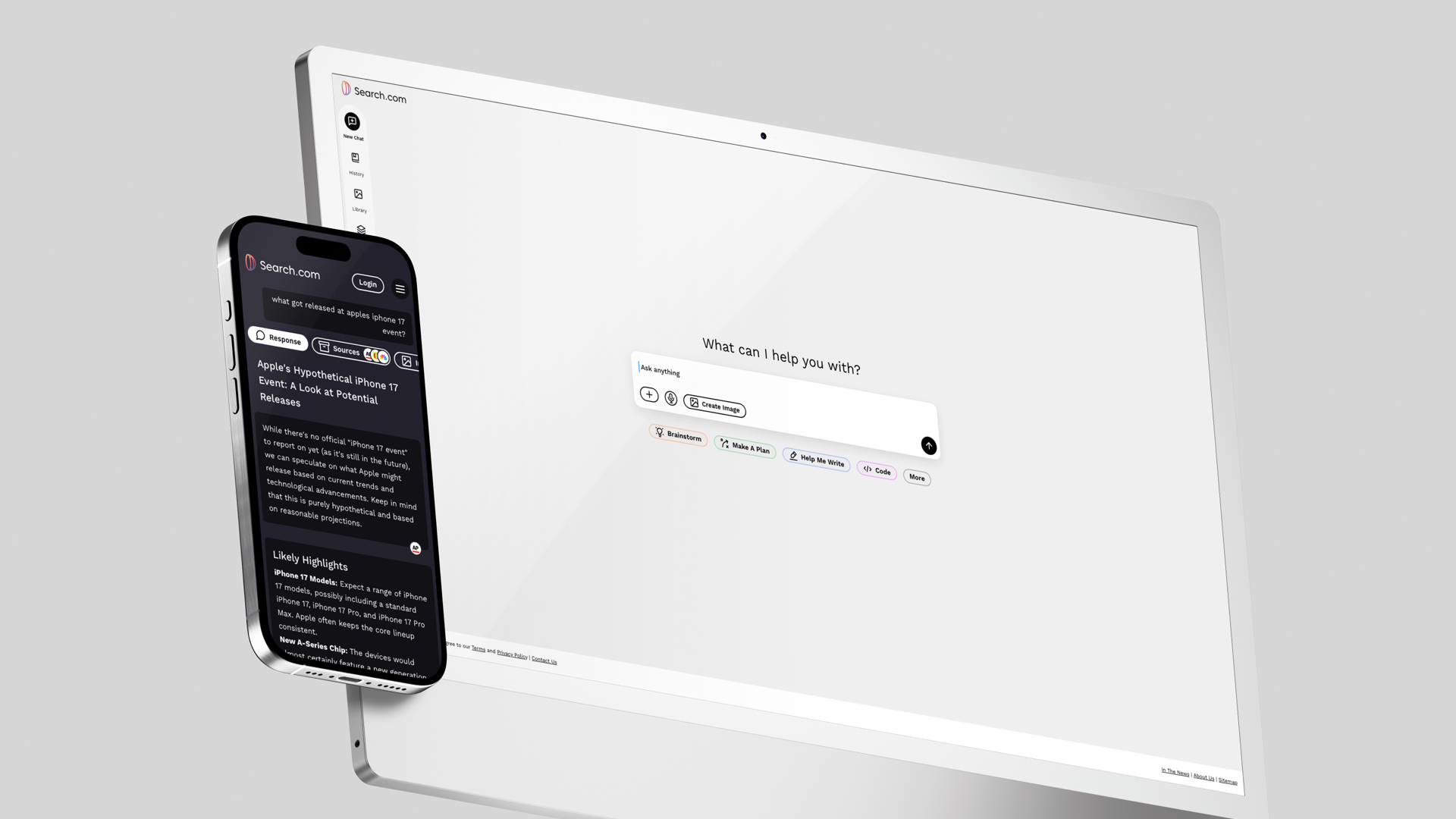
Search.com is a consumer AI platform operating as a sibling company within the same portfolio as Advertising.com. Rather than a traditional search engine, it was redesigned around an AI chat experience at its core — bringing a collection of company products together under one unified platform, extending into news, shopping, productivity tools, and a suite of purpose-built AI agents.
What exists at Search.com today is not this work. The redesign was not taken into production. What's shown here is the complete concept.
Responsibilities
My role was end-to-end product design: product strategy, information architecture, interaction design, visual design, and the look and feel direction and design system that underpinned the full platform. Working directly with product and engineering stakeholders, I defined the product vision and translated it into a detailed, production-ready design across every surface — from the core AI chat experience through News, Shopping, and the GPTs suite.
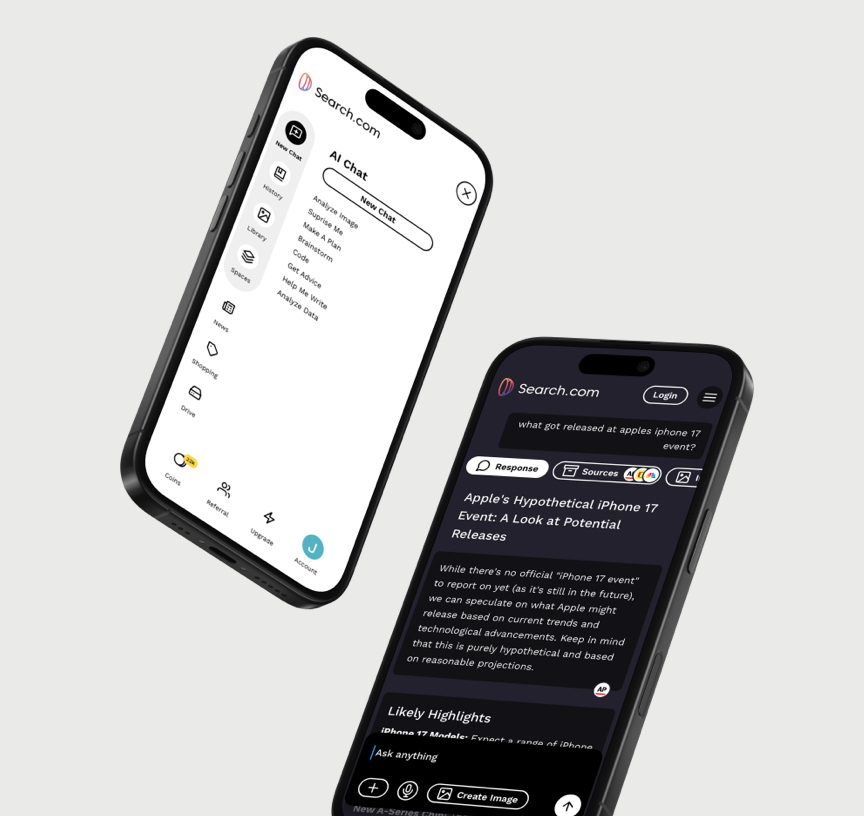
The core design challenge was balancing an AI chat-first experience with an ambitious monetization strategy — ensuring commercial mechanics enhanced rather than disrupted the primary interaction. Beyond the chat layer, unifying four distinct product areas under a single coherent navigation system required a clear information architecture that let users move fluidly between Chat, News, Shopping, and the GPTs suite without losing context. Threading the rewards programs — Coins, cash back, and the Plus subscription — across the experience added further complexity: each needed to feel present and discoverable within the features it applied to, without creating noise where it didn't.
An equally fundamental challenge was product identity — taking a collection of distinct products and making them feel like a single coherent experience that users could immediately understand and orient themselves within. The navigation system had to answer "what is this?" at a glance, while being architected to accommodate new sections as the product grew. That same system also needed to work seamlessly across desktop and mobile, where the constraints and user expectations are meaningfully different.
Chat
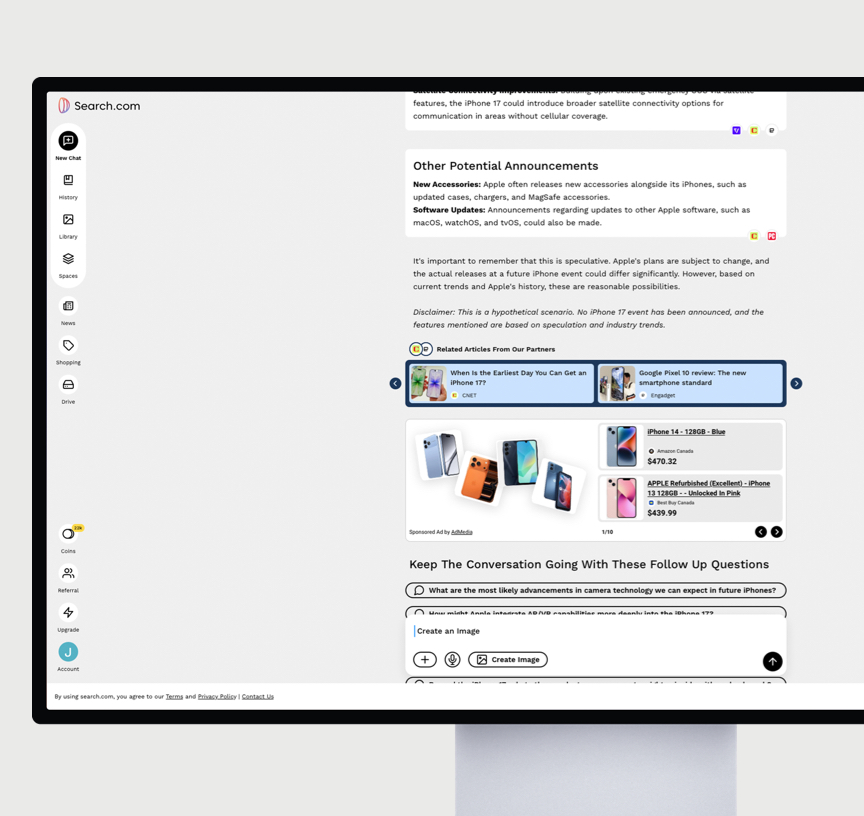
The primary experience was a full-featured AI chat interface — a capable alternative to tools like ChatGPT, built around a commitment to ethical AI. Rather than treating publisher content as undisclosed source material, the platform partnered directly with publishers and surfaced cited articles and partner sources inline with generated responses, giving users clear visibility into where information came from.
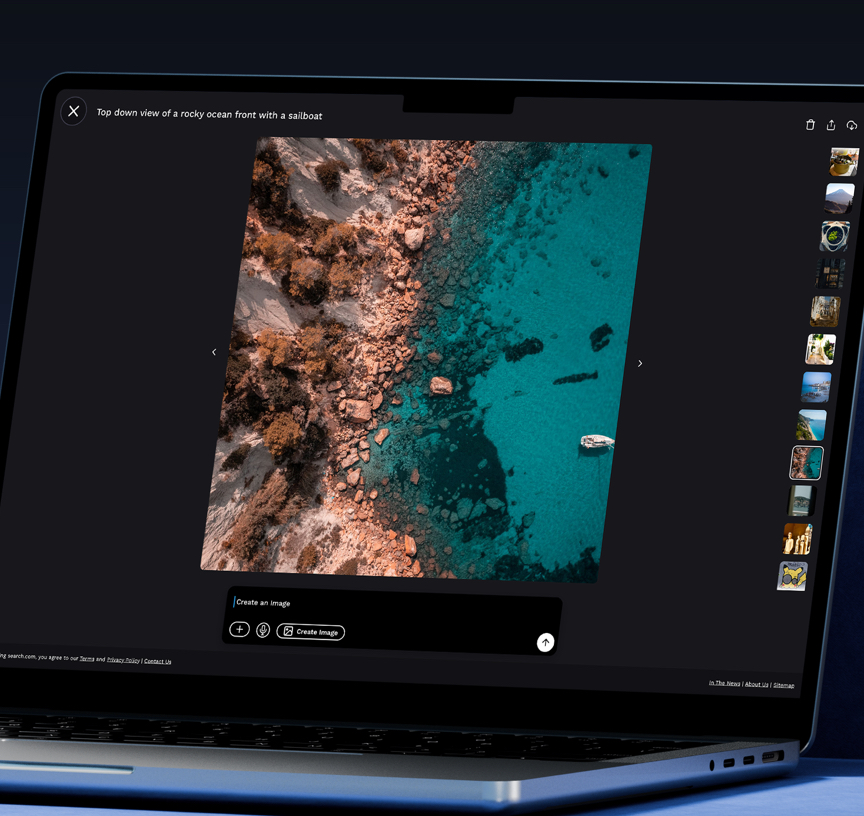
Beyond transparent sourcing, the experience was fully featured: persistent chat history, image generation, and workspaces — organized, persistent environments where users could build on and revisit ongoing work. Monetization was integrated throughout, keeping the platform commercially viable without compromising the core interaction.
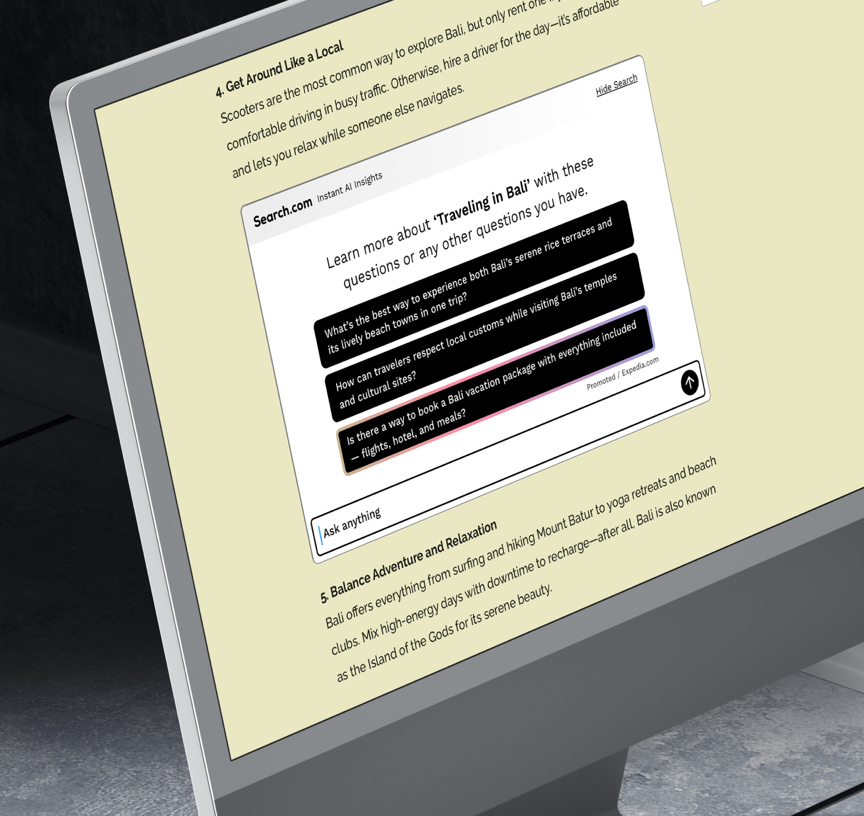
The publisher relationship extended in both directions. An embeddable widget allowed publishers to place a Search.com-powered experience directly on their own sites — surfacing contextually relevant prompt suggestions tied to the page content, with AI responses delivered inline. The widget also served as a monetization surface, integrating advertising products in a way that kept the experience useful to the reader — contextual rather than interruptive — while creating a viable revenue opportunity for publishers.
Platform
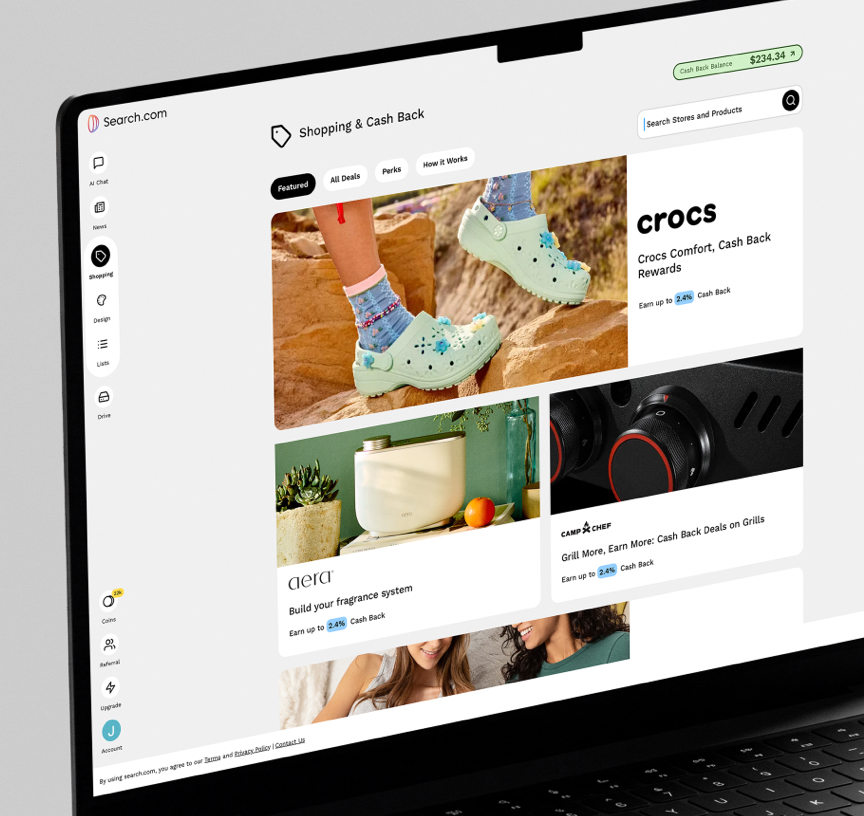
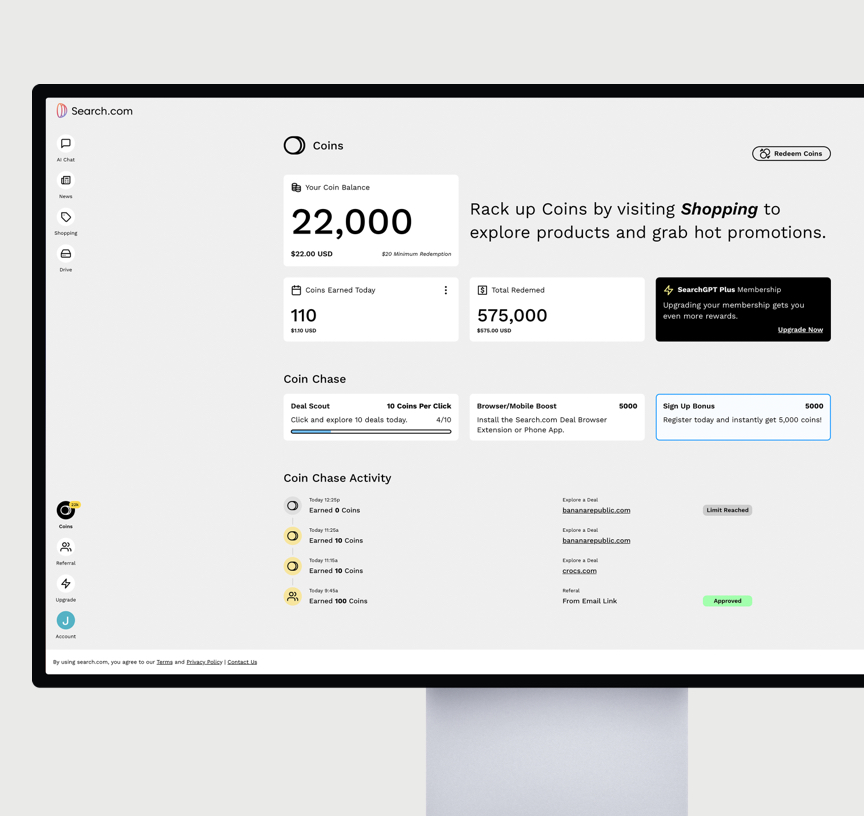
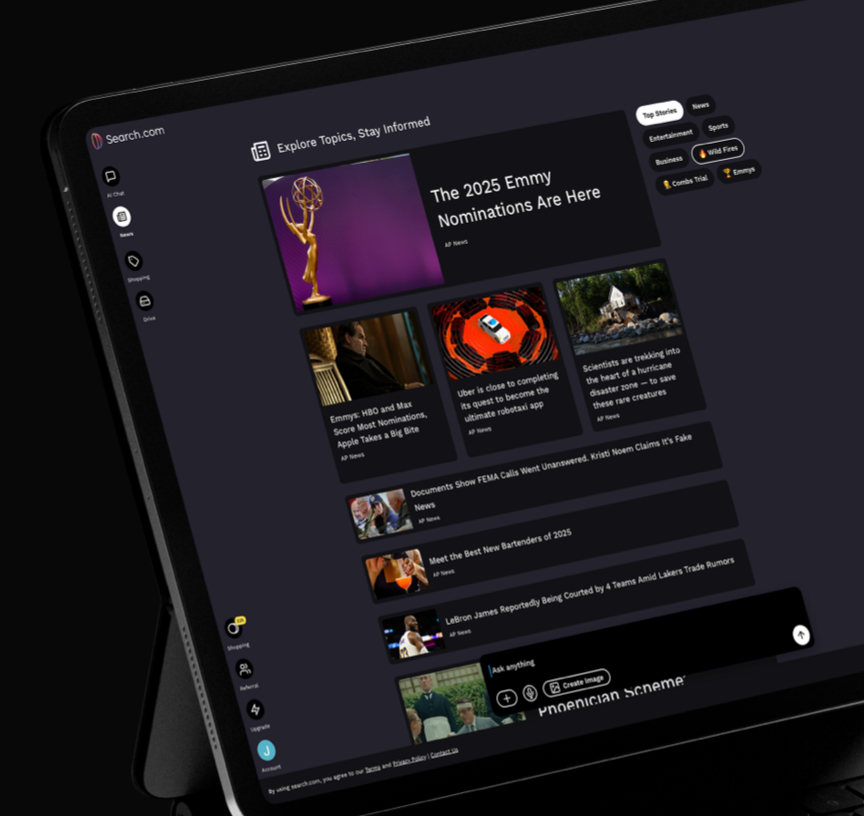
Beyond Chat, the platform extended into three distinct areas. News brought a curated editorial destination to the experience — a clean, scannable daily section surfacing timely content across categories. Shopping was built around everyday value: a rebates program with cash back rewards and a perks system — one of the benefits unlocked by Search Plus, a platform-wide subscription that extended across the full experience. Threaded across the broader platform was a Coins rewards currency — earned through engagement with various features and redeemable across the experience, creating a connective layer between otherwise separate parts of the product.
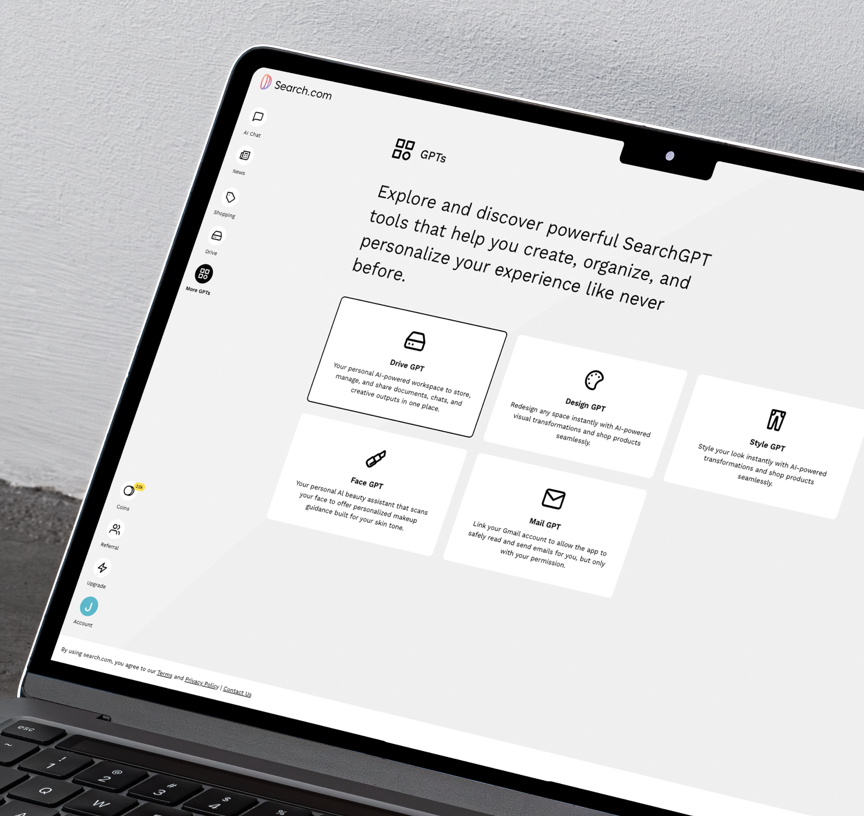
The platform also extended into purpose-built AI agents — specialized GPTs covering distinct user needs including Design, Drive, Style, Face, and Mail. Each offered a focused, task-specific interface that broadened the platform's utility across everyday workflows beyond general-purpose chat.
Underpinning all of it were the foundational flows that any platform of this scale requires: account creation and management, purchase flows, and reward redemption — each designed with the same care as the feature surfaces they supported.